Key takeaways
- AI product content has moved from experiment to production: Kleep's AI-generated videos are live on Lacoste, and Motion Engine turns stills into product video at catalogue scale.
- The new studio stack splits content into two tiers: hero campaigns that keep full human production, and the high-volume repetitive layer, PDP shots, colourways, video loops, that AI now handles.
- The economics are step-change, not incremental: on repetitive content lines, AI production can cut content costs by 90%.
- Brand safety is a workflow, not a hope: locked visual codes, product-fidelity checks, and human approval gates keep output on-brand at scale.
- Video stops being a luxury: when every PDP can carry motion, the format shifts from campaign asset to catalogue default.
AI product content at scale: the new studio stack
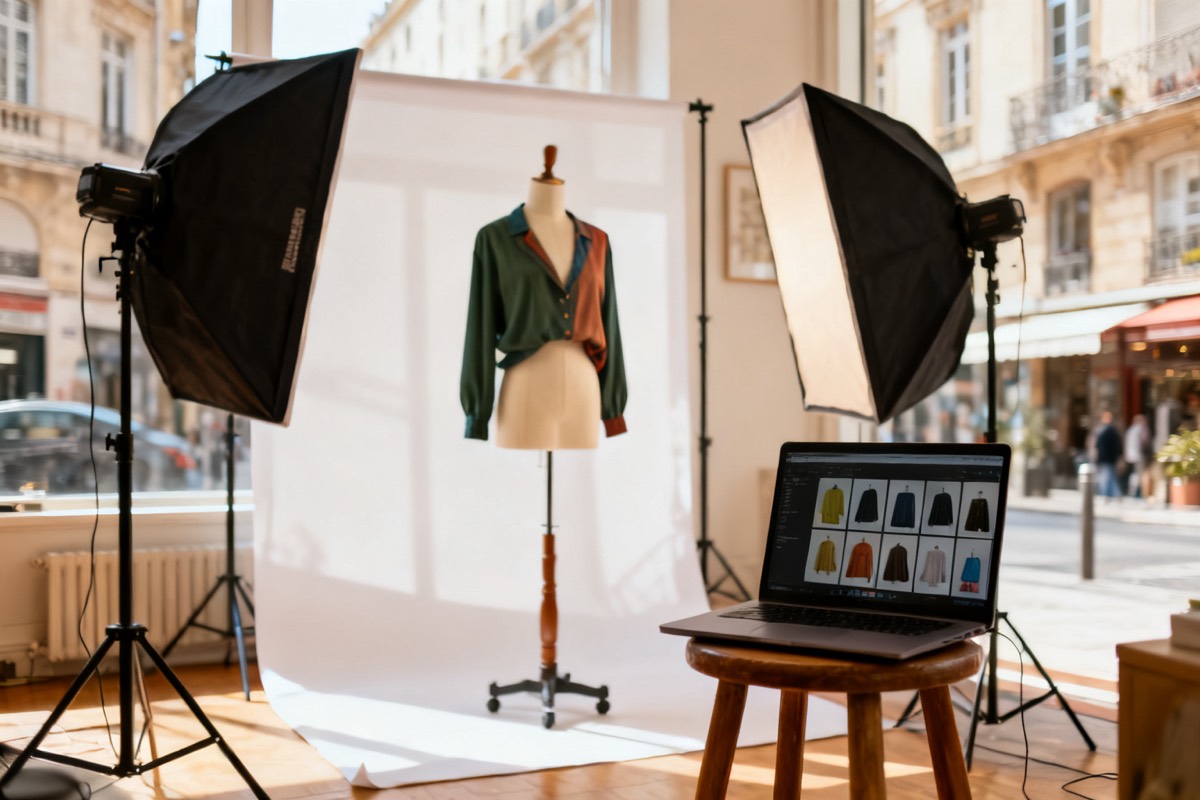
Fashion's content bill has always been structural: every product needs imagery, every season resets the need, and the studio, space, models, crew, retouching, sits between the merchandise and the money. The AI studio stack does not abolish that model. It splits it, cleanly, into work that needs a human eye and work that needs throughput.
The throughput layer is bigger than most teams admit: on-model PDP shots, colourway variants, localisation, and increasingly product video. That is the layer AI production now runs, and it is already in market, with Kleep's AI-generated videos live on Lacoste.
AI photoshoots: the still-image layer
AI photoshoots generate on-model and on-product imagery without a physical set. A garment shot once, or captured from flat imagery, can be rendered on varied bodies, in varied settings, in hours. The core discipline is fidelity: the product in the output must be the product, with its true colour, texture, and construction intact, because shoppers detect fabrication instantly.
The obvious first deployments are the repetitive ones: colourway variants of an already-shot style, size-inclusive representation beyond what a single casting allowed, and fast-turn PDP coverage for high-volume basics. None of this work ever needed a creative director on set. It needed consistency and speed, which is precisely what generation provides.
Product video and the Motion Engine
Video is the format shoppers respond to and the one traditional production prices out of reach at catalogue scale. A video per SKU, per season, was simply never economical, which is why most product pages are still frozen. Motion Engine changes that arithmetic: it turns product imagery into motion, giving a garment movement, drape, and presence without a film crew.
This is production reality, not roadmap: Kleep's AI videos run live on Lacoste. When motion costs approach still-image costs, the strategic question inverts, video stops being a campaign luxury and becomes a catalogue default, with the PDP as its natural home.
The workflow: from drop to published asset
- Ingest: product imagery or flat shots enter the pipeline as each drop lands.
- Generate: stills and video variants are produced against locked brand presets, casting, lighting, setting codes.
- Verify: automated product-fidelity checks confirm colour, print, and construction match the real garment.
- Approve: human review gates sign off before anything ships; the eye stays in the loop, at review speed rather than shoot speed.
- Publish: approved assets flow to PDPs, markets, and channels, with variants localised without reshooting.
Brand safety at generation speed
The credible objection to AI content is sameness: output that reads as stock AI rather than the brand. The answer is constraint. A brand's visual codes, casting profile, light, palette, art direction, are encoded as the boundary the generation works within, so scale never means drift. The look is a locked input, not a lucky outcome.
The second safeguard is the approval gate. AI moves image-making from creation speed to review speed, but a human still owns the yes. Teams that keep that gate report the same shift: the creative energy migrates to the hero work, while the machine handles the layer that was always production, not art.
The cost math
On repetitive content lines, the numbers are stark: AI photoshoots can cut content costs by 90%, and the calendar compresses from weeks of studio lead time to hours of pipeline time. The saving is not only cash, it is optionality. Localised variants, seasonal refreshes, and per-market imagery stop being budget debates and become configuration.
The honest framing is portfolio-level: hero campaigns keep their full human budgets, because that is where differentiation lives. The 90% applies to the long tail, and in a fashion catalogue, the long tail is most of the content.
What is an AI photoshoot?
An AI photoshoot generates on-model and on-product fashion imagery without a physical shoot, rendering a garment on varied bodies and settings from existing product images. It is used chiefly for repetitive content, PDP shots, colourway variants, localisation, where consistency and speed matter more than bespoke creative.
Can AI really generate product videos for fashion?
Yes, in production. Kleep's Motion Engine turns product imagery into video, and its AI-generated videos are live on Lacoste. The economics make per-SKU motion viable for the first time, shifting video from a campaign asset to a catalogue-wide format.
How much can AI cut fashion content production costs?
On repetitive content lines, cost reductions can reach 90%, with production time falling from weeks to hours. Hero campaign budgets typically stay untouched, the saving applies to the high-volume layer, which represents most of a catalogue's content need.
How do brands keep AI-generated content on-brand?
By constraining generation to the brand's codes, casting, lighting, styling, palette, running automated product-fidelity checks, and keeping a human approval gate before publication. The brand look becomes a locked input to the pipeline rather than something hoped for in the output.
Will AI replace fashion photographers?
It replaces the repetitive layer of production, not the creative one. Hero campaigns, brand imagery, and defining creative remain human work; AI absorbs the colourway variants, PDP coverage, and volume video that were always throughput tasks. Budgets shift toward the imagery that genuinely needs an eye.
Conclusion
The studio is not disappearing; it is being re-scoped. Human production keeps the work that defines the brand, and the AI stack, photoshoots for stills, Motion Engine for video, takes the volume layer at a fraction of the cost, with Lacoste already proving it in production. The brands that split their content this way get more imagery, more video, and more markets from the same budget. That is not a trend to watch. It is a stack to build.