
Key takeaways
- Virtual try-on has left the demo phase: production deployments like Kleep × Rat & Boa now run live across four markets, paired with Smart Sizing.
- VTO lifts conversion where uncertainty about look is the blocker, prints, silhouettes, dresses, occasionwear, not uniformly across a catalogue.
- Try-on alone answers "how does it look?"; it must be paired with sizing to answer "which size fits?". The strongest results come from running both.
- Fidelity is non-negotiable in production: the garment's real texture, print, and cut must survive rendering, or shoppers distrust the whole experience.
- Measure VTO like a practitioner: assisted versus control sessions, by category, over a full return cycle, not engagement vanity metrics.
Virtual try-on in production: past the hype cycle
For years, virtual try-on lived in press releases and pilot pages. In 2026 it lives on real product pages, at real volume. The interesting question is no longer whether the technology works, but what production deployments actually teach us about where it earns its keep.
A useful reference point: Kleep and Rat & Boa run Smart Sizing and Virtual Try-On together, live in four markets. That is the shape of a mature deployment, not a novelty button on one landing page, but fit and look answered side by side across the catalogue and across regions.
What a production deployment actually looks like
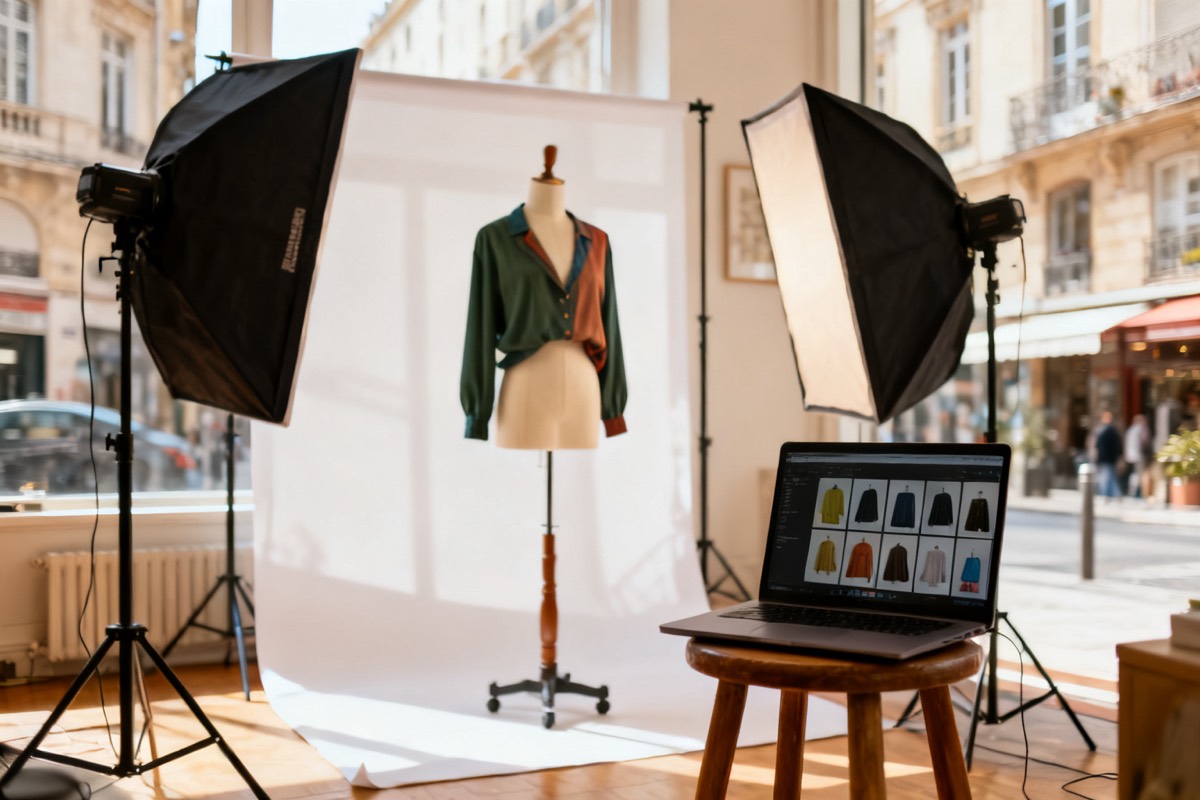
Production VTO means the try-on renders every relevant SKU, not a hand-picked demo set. It means latency low enough for a mobile session, output faithful enough that the print on the rendered dress is the print on the real dress, and an experience that holds up across markets, devices, and body types.
It also means operational integration: new drops flow into the try-on pipeline automatically, and the feature is instrumented against a control group from day one. If adding a product to try-on requires a manual project, it is still a pilot, whatever the press release says.
Where try-on lifts conversion
The lift concentrates where the shopper's doubt is visual. Dresses, occasionwear, strong prints, and distinctive silhouettes benefit most, because a flat product shot undersells exactly what the shopper is trying to judge. For a brand like Rat & Boa, whose identity lives in print and drape, that is the heart of the assortment.
High-consideration price points respond well too. When the cost of a wrong guess is high, the confidence a realistic try-on provides is worth real money at the point of decision.
Where it doesn't move the number
Basics, replenishment purchases, and items the shopper already owns in another colour see little effect. There is no visual doubt to remove, so there is no lift to collect. Deploying try-on there is harmless but should not anchor your business case.
The other place VTO underperforms is when it is asked to do sizing's job. A shopper can love how a dress looks on a model resembling them and still stall at the size selector. Look-confidence and fit-confidence are different problems.
Why pairing try-on with smart sizing works
The product page asks the shopper two questions: will I like it, and will it fit? Try-on answers the first; garment-specific size recommendation answers the second. Deployed together, as in the Rat & Boa setup, they remove both reasons a ready-to-buy shopper hesitates.
The pairing also compounds trust. A shopper who gets an accurate size recommendation extends that credibility to the try-on, and vice versa. One intelligence layer answering both questions reads as competence; two disconnected widgets read as gadgets.
Measuring VTO honestly in 2026
- Run assisted versus control sessions; in Kleep deployments, assisted sessions typically convert 15 to 25% higher.
- Read results by category, not blended, the average hides where the lift actually lives.
- Hold judgement until a full return cycle closes; conversion without keep-rate is half a result.
- Track size-selector behaviour: paired deployments should show fewer multi-size orders, not just more add-to-carts.
Does virtual try-on actually increase conversion?
Yes, where visual uncertainty is the purchase blocker, dresses, prints, occasionwear, and high-consideration items. Across Kleep deployments, assisted sessions typically convert 15 to 25% higher. On basics and replenishment purchases, the effect is minimal because there is little doubt to remove.
What does a production virtual try-on deployment look like?
Full-catalogue coverage with automatic ingestion of new products, faithful rendering of print and drape, mobile-grade performance, and measurement against a control group. Kleep and Rat & Boa run this live in four markets, with try-on paired to size recommendation.
Should virtual try-on be used with size recommendation?
Yes. Try-on answers how a garment looks; sizing answers which size to buy. Run alone, try-on lifts engagement but leaves fit doubt intact. Paired deployments remove both hesitation points and typically deliver stronger conversion and return outcomes.
How should retailers measure virtual try-on ROI?
Compare assisted sessions against a control, segmented by category, and wait a full return cycle before concluding. The right KPIs are assisted conversion, return rate, and multi-size ordering, not clicks on the try-on button.
Conclusion
The 2026 lesson from production is unglamorous and useful: virtual try-on works, in specific places, for specific reasons, and works best welded to sizing. Deploy it where visual doubt lives, measure it against a control, and pair it with a real fit answer. That is how try-on stops being a demo and starts being a line on the P&L.