
Key takeaways
- Generative AI in fashion has crossed from pilot to plumbing: it now powers search, sizing, imagery and merchandising behind the scenes.
- The winners treat it as a measured system, instrumented against controls, not a press release.
- The economics are grounded: 30% returns as the target, −11% at Showroomprivé, −16% size-related returns at ETAM, 15–25% conversion lift on assisted sessions.
- Adoption is visible in volume: Kleep sizing flows grew from 17k in 2023 to 4.2M in 2025, and run every 5 seconds in 2026 across 300+ brands.
- The 2026 question is no longer whether to deploy, but how well you measure what you deployed.
From experiment to infrastructure
Two years ago generative AI in fashion was a pilot you ran to look innovative, a chatbot in a corner of the site, a demo for the board. In 2026 it is becoming infrastructure: the layer that powers search, sizing, imagery, and merchandising behind the scenes, invisible to the shopper except as a store that simply works better.
The shift is from novelty to utility. The brands pulling ahead are not the ones with the flashiest demo. They are the ones quietly compounding gains across the funnel: a few points of conversion here, a double-digit cut in returns there, content costs falling while content velocity rises.
Where it is delivering
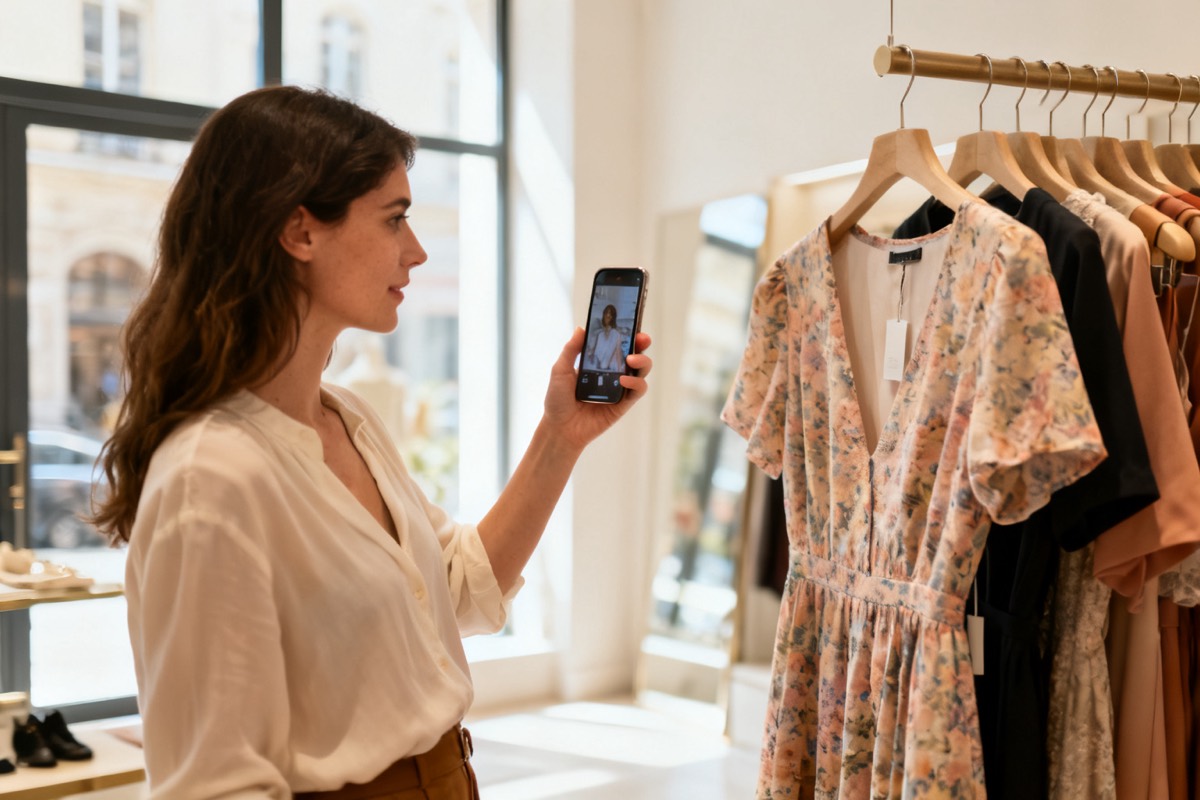
- Discovery: conversational and visual search that understand intent and images.
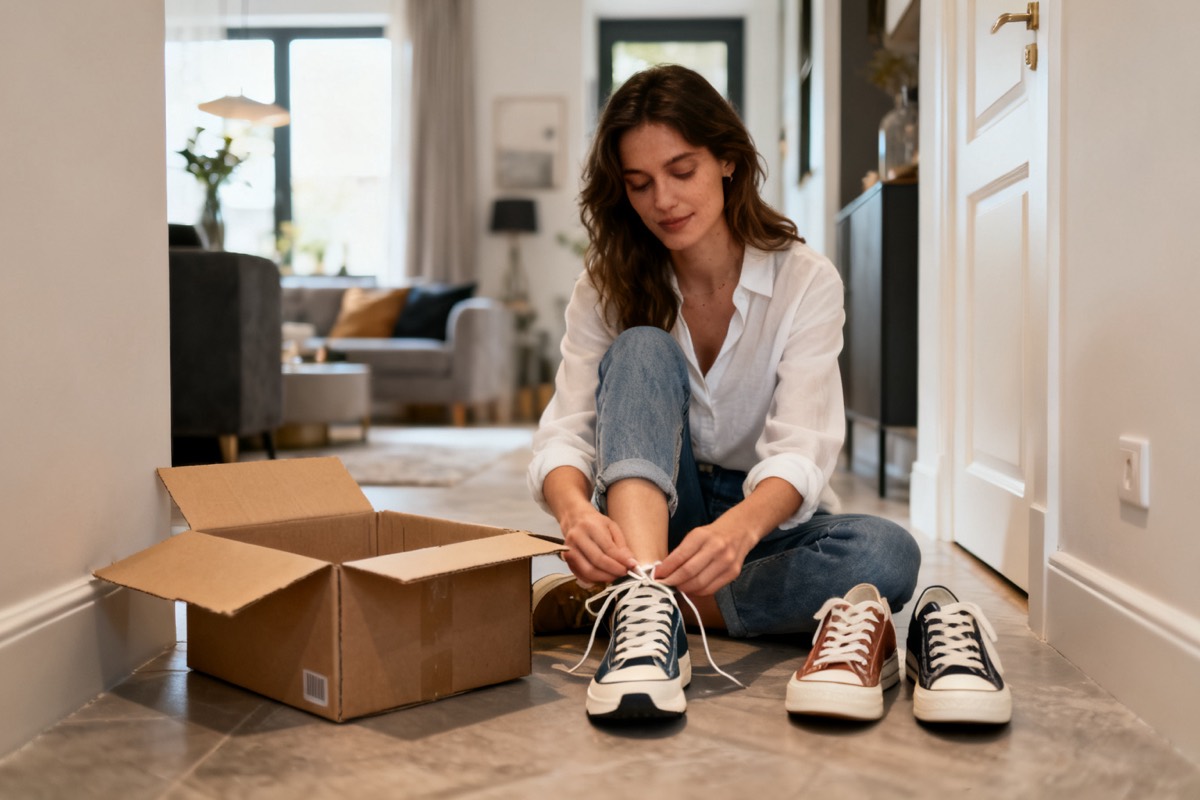
- Fit: real-measurement sizing from questionnaires and two-photo body scans.
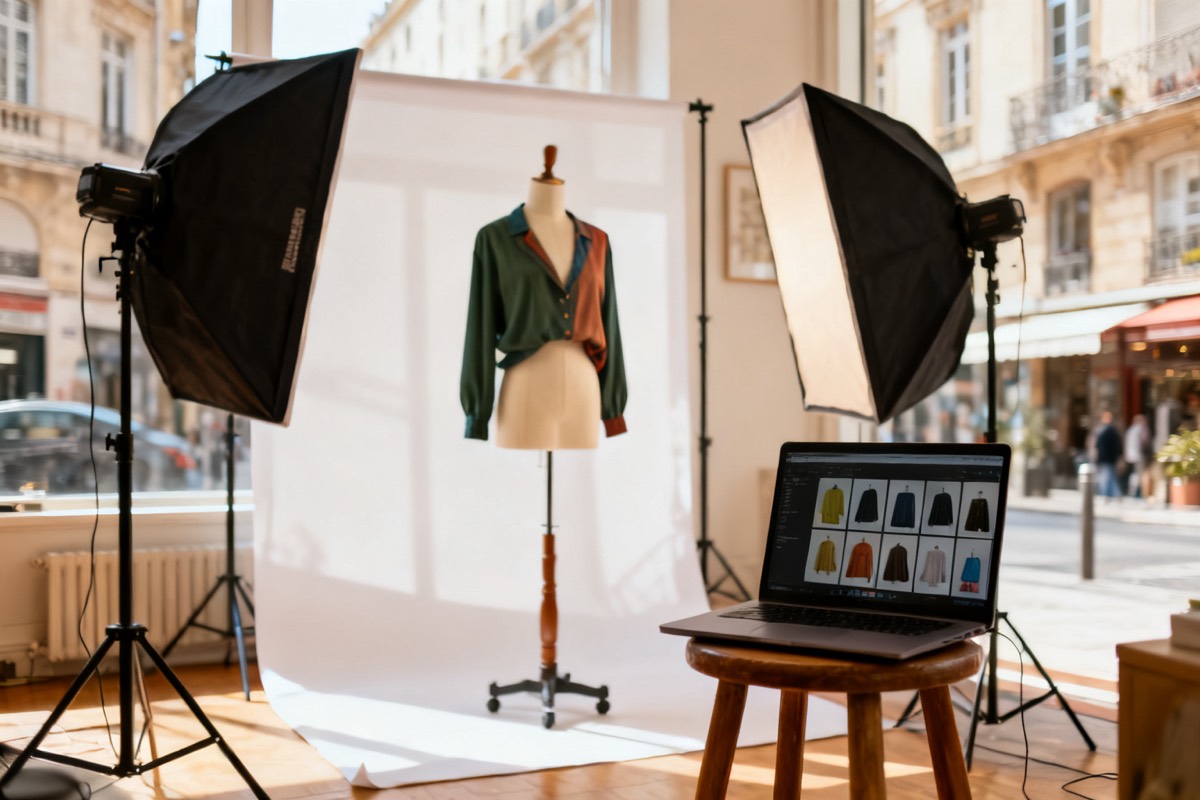
- Content: AI imagery cutting production cost and time on repetitive shoots.
- Merchandising: goal-driven, live re-ranking of category pages.
The four layers, briefly
Discovery is where intent meets catalogue: Conversational Search reads occasion and constraint phrasing that keyword engines dead-end, and Visual Search turns a screenshot into a query. Fit is where certainty replaces guessing: Smart Sizing matches a real body profile to each garment's real measurements. Content is where the treadmill breaks: AI imagery handles the repetitive lines at savings industry estimates put as high as 90%. Merchandising is where goals meet pages: continuous re-ranking against revenue, margin or sell-through.
The compounding effect comes from the layers sharing signals. The body profile that sizes a dress also filters recommendations to wearable options; the intent read by search informs what the category page promotes. A suite behaves like one brain; a patchwork of point tools does not.
What separates winners from dabblers
The dabblers bolt on one tool, measure nothing, and conclude AI is overhyped. The winners treat it as a system, instrument it against controls, and follow the outcomes. The A/B test is the tell: ETAM tested sizing properly and measured +5% revenue with −16% size-related returns; ba&sh tested Kleep head-to-head against True Fit and measured +88% add-to-cart; Faguo tested footwear sizing and measured +6.7% add-to-cart, +6.8% checkout.
Brands like Lacoste, ba&sh, and Victoria Beckham are using these capabilities as part of how the store runs, not as a press release. The roster tells the same story, 300+ brands live, from Givenchy and Rabanne to The Kooples, A.P.C. and Represent. When luxury houses and volume retailers converge on the same infrastructure, the experiment phase is over.
The numbers that anchor the case
The economics are grounded, not speculative. Fashion returns run around 30%, fit is the top cause, and Showroomprivé cut returns 11% with AI sizing. Across deployments, brands typically see returns fall 20 to 50% and conversion lift 15 to 25% on assisted sessions. Those are defensible ranges, and they are why the investment holds up in a spreadsheet, not just in a keynote.
Adoption volume corroborates it: 17,000 Kleep sizing flows in 2023 became 500,000 in 2024 and 4.2 million in 2025; in 2026 one runs every 5 seconds. Infrastructure grows like that. Novelties do not.

Infrastructure grows like that. Novelties do not.
How is generative AI used in fashion e-commerce in 2026?
Across four production layers: intent-reading conversational and visual search, real-measurement AI sizing, generative imagery for product content, and goal-driven merchandising. The common thread is that it now runs the store rather than decorating it.
What ROI does AI deliver for fashion retailers?
Measured results include an 11% return reduction at Showroomprivé, +5% revenue and −16% size-related returns at ETAM's A/B test, 20 to 50% typical return reductions, and 15 to 25% conversion lift on assisted sessions. The defensible numbers come from controlled tests, not before-and-after comparisons.
Which fashion brands are using AI sizing?
Over 300 brands run Kleep in production, including Givenchy, Lacoste, Victoria Beckham, Kenzo, Represent, A.P.C. and Maison Kitsuné, a range spanning luxury houses to volume retailers, which signals the technology has generalised.
Should fashion brands build AI capabilities in-house or buy them?
For most, buy the infrastructure layers, sizing, search, try-on, where specialised vendors amortise R&D across hundreds of brands, and keep strategy, brand and merchandising judgement in-house. The scarce resource is not models; it is garment-level data discipline and honest measurement.
Conclusion
The 2026 state of the market is maturity. Generative AI in fashion has stopped being a question of whether and become a question of how well. The leaders treat it as plumbing, measure it honestly, and let the returns and conversion numbers make the case.