
Key takeaways
- Extending the size run without extending fit confidence widens the rail, not the welcome.
- Static charts are built on an assumed proportional body and degrade fastest for the shoppers furthest from that assumption, the ones who most need reliable guidance.
- AI sizing serves every body the same way: an individual profile matched to each garment's real measurements across the full run.
- Two low-friction paths in, a 30-second questionnaire or a two-photo scan, remove the tape measure and the self-judgement.
- Inclusivity converts: fit-confident shoppers buy more and return less, as ETAM's +5% revenue and −16% size-related returns suggest.
Inclusivity is more than an extended size run
Adding sizes to the catalogue is the start, not the finish. If a shopper across the size range still cannot tell whether a garment will fit, you have widened the rail but not the welcome. The announcement said everyone is served; the product page still says good luck.
True inclusivity means every body gets the same confidence at the point of purchase. The shopper at either end of the size curve deserves an answer as precise as anyone in the middle, and today, mostly, they get the least precise answer in the store.
Where standard sizing excludes
Static size charts are built around an assumed proportional body, then extrapolated outward. Grading rules stretch the pattern mathematically, but real bodies do not vary mathematically, proportions shift across the range, and the further a real body sits from the base assumption, the less the chart serves it.
So the shoppers most anxious about fit, often those least well served by standard sizing, get the least reliable guidance. The system fails the people who need it most, and they respond rationally: they bracket heavily, return often, or stop risking the purchase at all. That last group is invisible in your returns data. They are the demand that never arrived.
How AI sizing serves every body
- A body profile built from the individual, not extrapolated from an average.
- Two paths in: a 30-second questionnaire or a two-photo scan, suiting different shoppers.
- Recommendations matched to each garment's real measurements across the full size run.
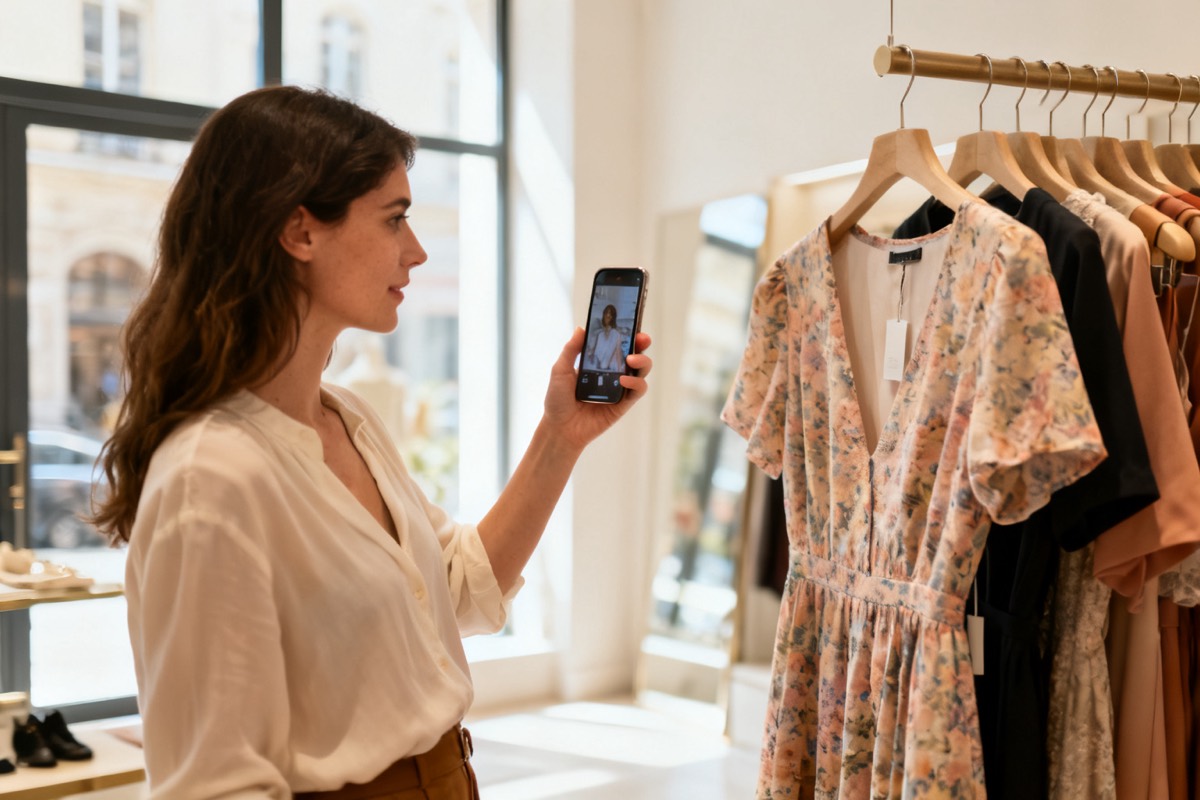
- Fit-aware recommendations and try-on that reflect the shopper's actual body.
Why the mechanism matters
Cohort-based sizing tools inherit the exclusion problem: they infer from historical purchase data, which is thinnest exactly where standard sizing already failed people. A measurement-based approach has no cohort to be missing from, an individual profile matched to a garment spec works identically at every point on the size curve.
The experience layer matters as much as the maths. A two-photo scan or a 30-second questionnaire asks nothing of the shopper that feels like a test, removes the tape measure, and, as we explore in The Psychology of Size, removes the self-judgement that makes traditional size guides quietly hostile. Extending it across the store, fit-aware Smart Recommendations and Virtual Try-On on the shopper's own body complete the picture: discovery that reflects them, not a sample size.
The business and the brand case
Inclusive, confident sizing widens the addressable market: shoppers who used to abandon over fit uncertainty can now buy. That is conversion you were leaving on the table, and the pattern across deployments, where assisted sessions convert 15 to 25% higher, is the general form of that recovery.
It also cuts the high return rates that fit anxiety produces, ETAM's A/B test measured size-related returns down 16% alongside revenue up 5%, and it tells every shopper they belong in the store. The commercial case and the brand case are the same case, which is why the 300+ brands running this in production span luxury to mass market.

The announcement said everyone is served; the product page still says good luck.
What makes an online store size-inclusive?
More than an extended size run: every shopper, at every point on the size curve, needs equally reliable fit guidance at the moment of purchase. Extended sizes without fit confidence widen the assortment but leave the uncertainty, and the returns, in place.
Why do size charts fail plus-size and petite shoppers most?
Charts are graded outward from an assumed proportional base body, and real proportions shift across the size range in ways the maths does not capture. The further a body sits from the base assumption, the less accurate the chart, so guidance is weakest where anxiety is highest.
How does AI sizing improve size inclusivity?
It builds an individual body profile, via a 30-second questionnaire or two-photo scan, and matches it to each garment's real measurements, a mechanism that works identically at every size. Unlike cohort-based tools, it does not depend on historical purchase data that is thinnest for underserved shoppers.
Does size inclusivity actually increase sales?
Yes, fit confidence converts shoppers who previously abandoned, and it cuts the returns fit anxiety creates. ETAM's A/B test paired a 5% revenue lift with a 16% drop in size-related returns; assisted sessions typically convert 15 to 25% higher.
Conclusion
A size-inclusive store is not just one with more sizes. It is one where every body gets a precise, trustworthy fit answer. Real-measurement AI sizing delivers that across the whole range, turning inclusivity from a label on the rail into an experience at checkout.