
Key takeaways
- AI Merchandising automates the ordering of category pages against a goal you choose: revenue, margin, sell-through, newness.
- It ranks dynamically from live signals, conversion, stock depth, margin, session behaviour, instead of a hand-dragged grid that goes stale in hours.
- Merchants keep the strategy; the system executes it continuously at a scale no team can match manually.
- The quiet superpower is stock-awareness: it stops promoting what you cannot fulfil and accelerates what you need to move.
- It compounds with the rest of the discovery stack, search, recommendations, sizing, because every surface reads the same signals.
Merchandising, automated and goal-driven
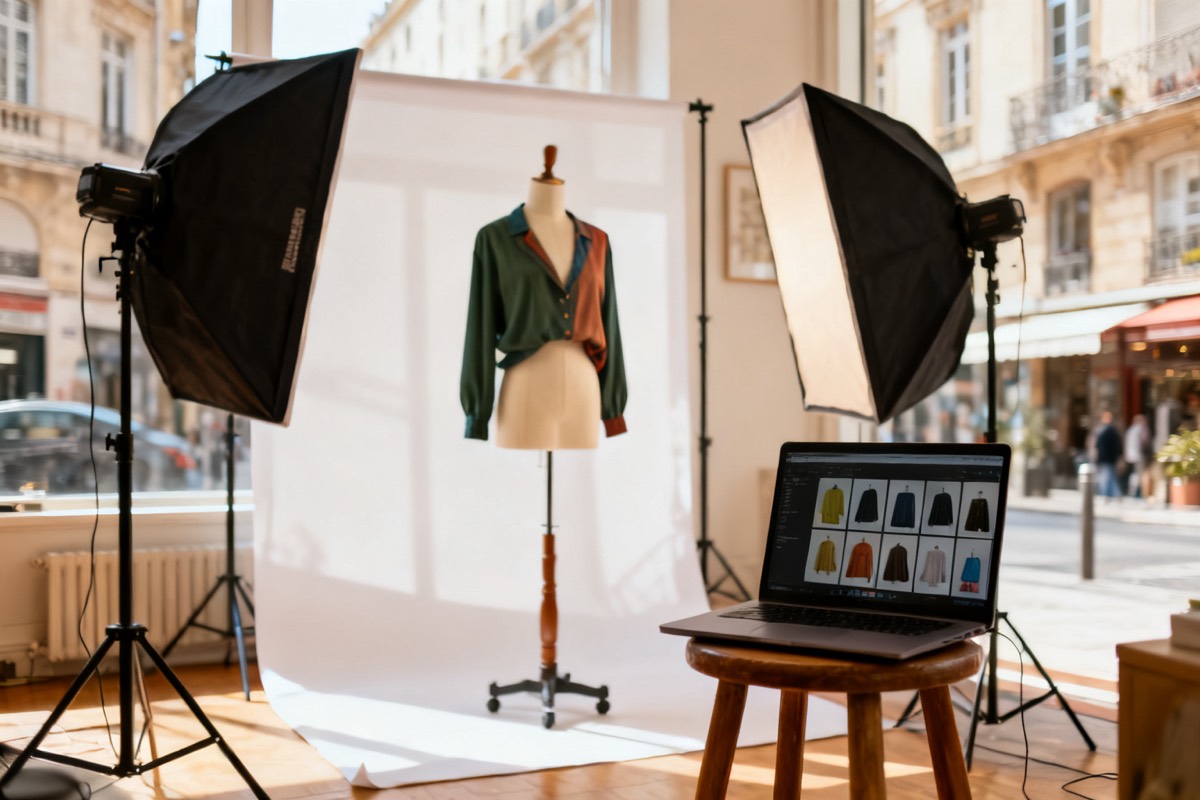
Merchandising is the order products appear on a category page, the digital equivalent of deciding what goes in the window and what goes at the back of the store. For decades a team set it by hand, dragging hero products to the top and reshuffling by gut and by season.
AI Merchandising automates that ordering against a goal you choose: revenue, sell-through, margin, newness. The page arranges itself to serve the objective instead of someone's best guess. Crucially, the merchant still sets the objective, the machine takes over the part of the job that was never really human-scale: re-ranking thousands of products, continuously, as reality shifts.
What it actually optimises
Rather than a fixed order, the system ranks products dynamically using real signals: what is selling, what is in stock, what margin each item carries, what each shopper is responding to right now. Set the goal to clear end-of-season stock and the page promotes the right items at the right depth. Set it to maximise margin and the mix shifts. The objective drives the layout.
Goals can differ by context, too. New-season categories can rank for discovery and newness while outlet categories rank for sell-through, the same engine, different objectives, no extra headcount.
The signals it reads
- Conversion and add-to-cart rates per product.
- Stock depth, so you stop promoting what you cannot fulfil.
- Margin and price, to weight toward profitable sell-through.
- Live shopper behaviour on the session, for relevance in the moment.
Why manual merchandising falls short
A human team cannot re-rank thousands of products across hundreds of categories every hour as stock and demand shift. By the time a manual grid is updated, it is already stale: the hero product at position one is down to broken sizes, the sleeper hit is buried on page four, and the weather turned yesterday.
There is a subtler failure, too. Manual merchandising optimises for the merchandiser's eye, what looks right, while the goal is commercial. The two often disagree, and only measurement settles it. AI Merchandising does not replace merchant judgement on strategy, brand and storytelling. It executes that strategy continuously, at a scale and speed no team can match by hand, and reports honestly on what worked.
Where it fits in the stack
Category pages are one discovery surface among several. The shopper who arrives through Conversational Search, browses a re-ranked category grid, and sees Smart Recommendations on the product page is touching three systems that work best when they read the same signals: stock, margin, behaviour, and, with Smart Sizing in place, fit.
That is the argument for a suite over a patchwork of point tools. A category page that promotes an item, a recommendation rail that pairs it, and a sizing layer that de-risks it are pulling in the same direction: assisted sessions across our deployments typically convert 15 to 25% higher.
What is AI merchandising in e-commerce?
It is the automated, goal-driven ordering of products on category and listing pages. The system ranks items continuously from live signals, sales, stock, margin, shopper behaviour, against an objective the merchant chooses, such as revenue, sell-through or newness.
Does AI merchandising replace human merchandisers?
No, it changes their job. Merchants set strategy, objectives and brand rules; the engine executes the re-ranking at a scale and frequency no team can do by hand, and reports on results. The judgement stays human, the labour goes to the machine.
How is AI merchandising different from personalisation?
They overlap but start from different ends: merchandising optimises the page against business goals for everyone, personalisation adapts it to the individual session. Modern systems blend both, a goal-driven ranking, adjusted by live shopper signals.
What results can AI merchandising deliver?
Faster sell-through on stock you need to move, fewer dead grids promoting out-of-stock heroes, and higher conversion from more relevant pages. As part of a full discovery suite, assisted sessions typically convert 15 to 25% higher.
Conclusion
AI Merchandising turns the category page from a static shelf into a goal-driven surface. You set the objective, the system orders the products to hit it, and it keeps adjusting as reality changes. That is merchandising that works while you sleep.